
⌚ The bracelet
What if your body could tell you you're stressed before you realize it?
Meet the TEEN stress bracelet.
- Measures signals from your body
- Looks for signs associated with stress
- Vibrates when your signals rise
- Changes color with your stress level
- Reminds you it's time to reset
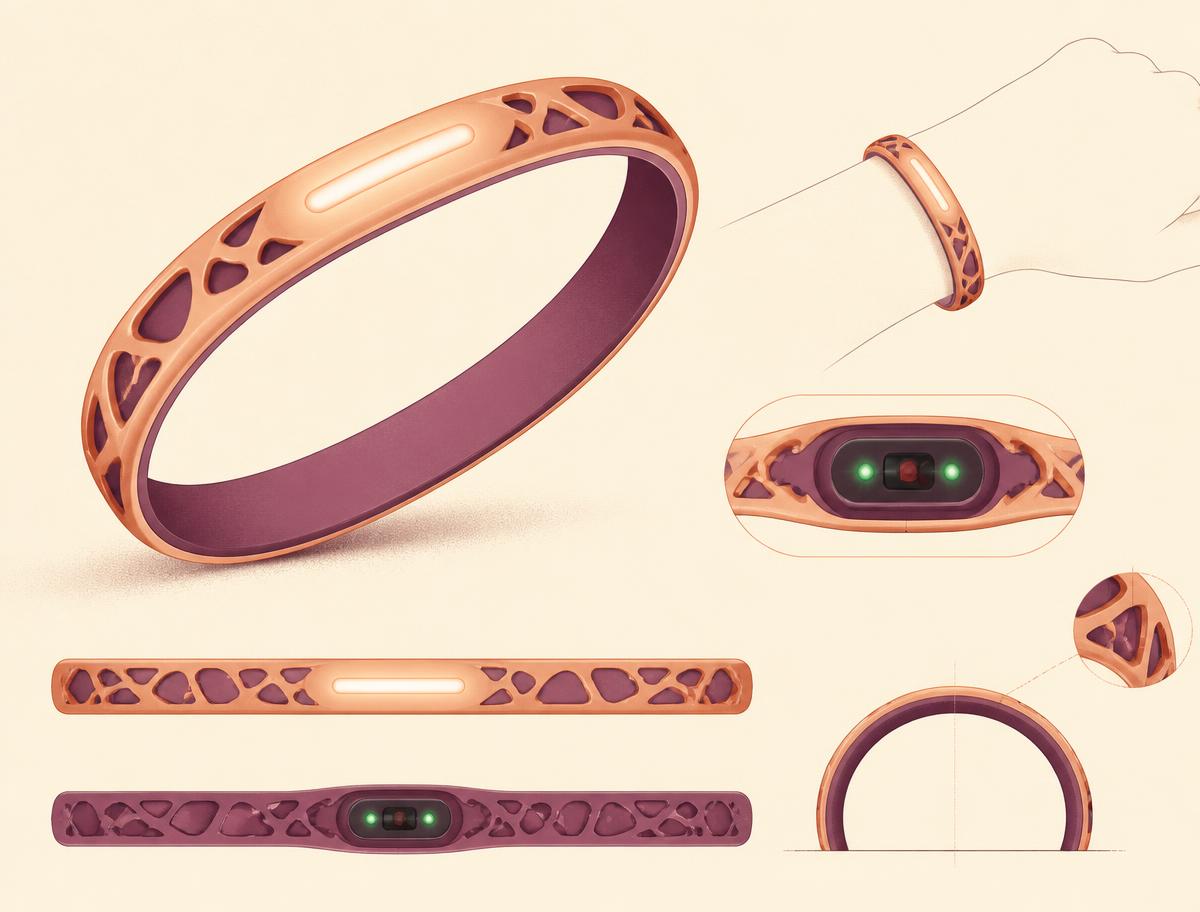
How I built it
Designed in CAD, then built around low-cost components a student can actually source.
1. The band
Designed on CAD and 3D printed, sized for a wrist so the sensor sits flat against the skin — contact quality matters more than anything else for a clean signal.
2. Sensing
An optical sensor uses green LEDs and photodiodes to detect changes in blood flow at the wrist, the same approach used by fitness wearables to estimate pulse and heart-rate variability.
3. Feedback
A microcontroller reads the sensor and drives two outputs: a haptic actuator that buzzes when readings stay elevated, and miniature LEDs that shift color with the trend.
The bracelet is a student prototype. It estimates physiological signals associated with stress — it does not diagnose anything, and it is not a medical device.
Why tracking stress is worth doing
Stress you notice early is easier to handle
Most stress strategies work best before you are overwhelmed. A nudge while your signals are climbing gives you a chance to use one.
Long-term stress affects learning and memory
Research links prolonged stress and elevated cortisol with changes in the hippocampus, a brain region involved in learning and memory, and with a higher risk of anxiety and depression. These are population-level findings, not predictions about any one person.
Exercise and sleep move the needle
Studies associate regular physical activity, mindfulness practice and consistent sleep with lower reported stress — which is exactly what the hacks page is built around.